
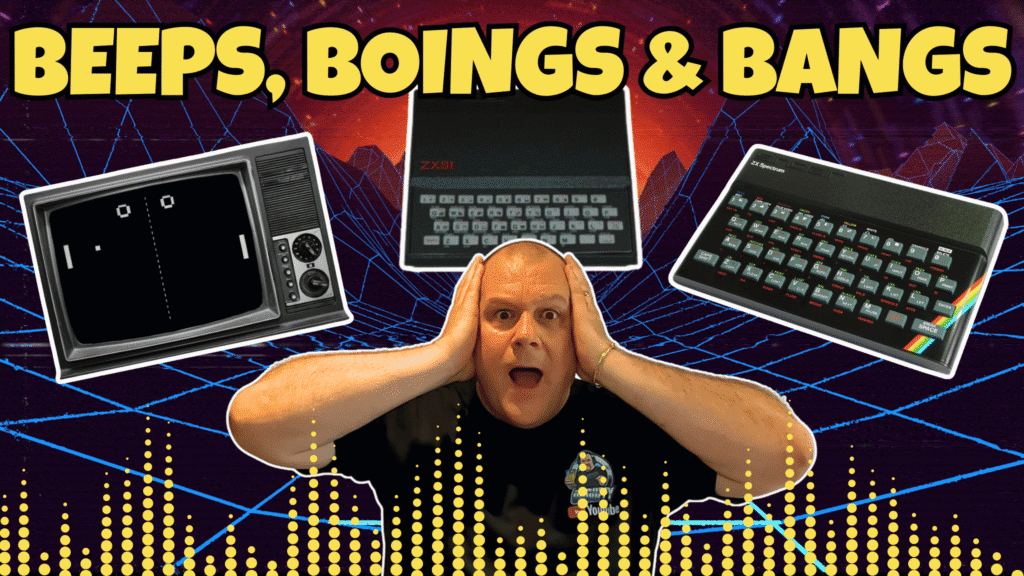
Ah, the sweet sound of nostalgia. There’s nothing quite like the audio time machine that is retro gaming. While the visuals of old-school games might be blocky, jagged, and charmingly crude, it’s the sound effects and music that really embed themselves into your memory like a cassette tape stuck on loop. And I, OGDuffy, have been looped for decades.
Let’s rewind to the very beginning, shall we? Back to the sound that started it all…
PONG: The Sound of a Digital Bat Smacking a Dot
PONG. Just saying it makes a noise in your head, doesn’t it? That boink. A single, lonely blip that might as well be the ‘once upon a time’ of video game audio. It wasn’t much, but it was everything at the time. That repetitive bloop and blip created tension, rhythm, and even its own minimalist soundtrack.
There was no need for fancy scores or dramatic flourishes. It was man vs. machine (or more often, sibling vs. sibling), and that sound was the drumbeat of your digital duel. It may sound primitive now, but back then, PONG’s audio was bleeding edge, as we simply had no other options for us home gamers at the time. Thank god for Binatone and B&W portable TV’s… Oh Happy Days, or were they?
And then came my own foray into home computing…
ZX81: The Silent Era of Gaming
My first home computer? The Sinclair flat keyboarded warrior that was the ZX81, with a 16k Ram Pack no less! Thinking back this silent assassin still holds some classic gaming memories for me, 3D Monster Maze and the simple Psion produced adventure games still standout for me… But, there was a distinct lack of something that would have been the icing on the cake… What was it now? Oh yes, that’s it… SOUND…. Or the complete lack of it! This simple 1K computer, but mine had the turbo upgrade of 16K😎 had zero sound, which when you think about is a major part of games now, but we knew no different then… Your imagination would supply the sound FX and tunes relevant to the game… Or a cassette tape or vinyl album would have filled the void, namely Queens Flash Gordon soundtrack or the make up wearing pirate wannabe that was Adam Ant… Different times indeed.
Spectrum: The upgrade and Re-Awakening of Sound!
Upon the arrival and vast upgrade from its predecessor my Sinclair ZX Spectrum 48K was a HUGE leap in advancement! My ZX81 soon become a collector in its own right… It collected DUST…
In comparison to the Spectrum it just didn’t have a chance… It would be like Bungle from Rainbow (What a TV show!) VS the then Heavyweight boxing champion Larry Holmes! (That is a fight I would have paid to see!)
Seriously, if the ZX Spectrum’s loading noise was released on vinyl today, some hipster DJ would be spinning it at a warehouse rave in East London. That shrill, syncopated crunch was the siren song of anticipation – is this game going to load, or crash halfway through with a R Tape loading error? Pure audio suspense.
I now had game audio albeit Beeps and crunchy type noises but it gave a whole new immersion to my home gaming and occasionally the little box of magic that was the Spectrum would surprise me.
Who remembers the Speccy blurting out the word ‘GHOSTBUSTERS’ in that crunchy, metallic type distortion of sound? Listening back now it sounds pretty rough but at the time for me it was a WOW moment! And of course the amazing adventure game that was Fairlight created some stunning music… OK it was only on the intro screen but it set out the whole feel for the game that when started transcended into… SILENCE, yes no game sound, but the intro music was so good, I forgave the developers.
The ZX Spectrum had done one thing for my home gaming, it had opened my ears to home gaming sounds and things were about to get a whole lot better…
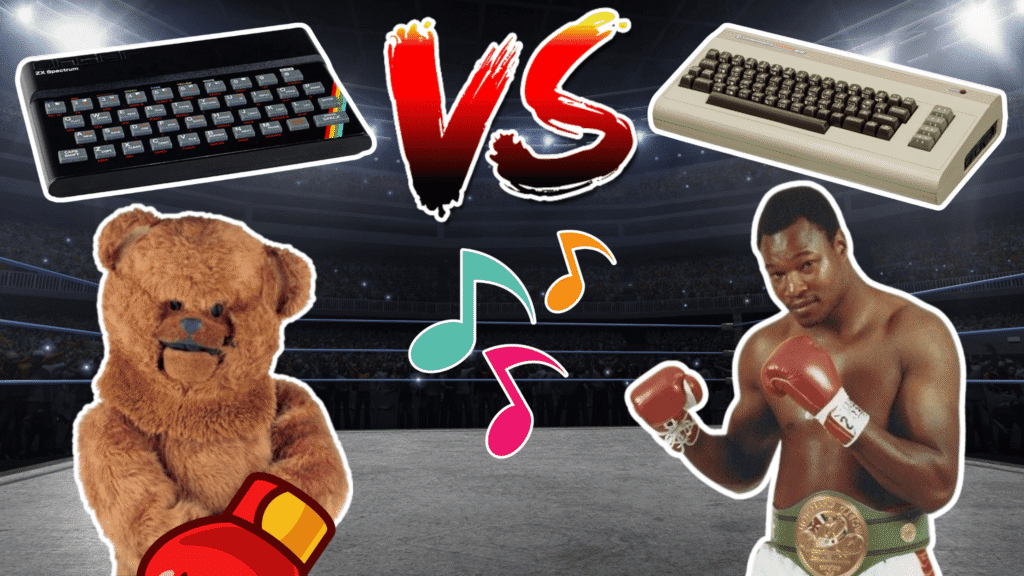
Enter the SID: The Commodore 64 Changes the Game
And then, oh my pixelated stars, came the Commodore 64.
If the Spectrum was the crusty transistor radio of home computing, the Commodore 64 was a rock concert in your bedroom – thanks entirely to the legendary SID chip. The Sound Interface Device (SID) turned 8-bit gaming into a full-blown musical movement. This thing had three independent channels, filters, envelopes – it was practically a synthesiser disguised as a home computer… Or for me, a gaming machine.
Suddenly, games had music – real music. Music you’d listen to on its own. Music that slapped harder than your mate’s dad at a school disco.
Ocean Software: Loading Screens That Were Worth the Wait
Ocean Software was one of the first companies to truly embrace the potential of the SID chip. Their games often featured beautifully animated loading screens and music that made waiting half an hour to play a game actually enjoyable.
Seriously, you’d put on Robocop, and before you even pressed a key, you were bopping to some banger coming out of your telly. The loading music for Ocean games felt like a reward in itself. You weren’t just playing a game – you were experiencing art. Well, 8-bit art. But still.
Rob Hubbard: The Mozart of the Microchips
Now let’s talk about the GOAT – Rob Hubbard. This man wasn’t just a composer. He was a wizard, a hacker of sound who could wring an orchestra out of the SID chip. His work on the C64 is the stuff of legend.
I remember the first time I loaded up International Karate. That opening tune was hypnotic. You weren’t sure whether to meditate or practice your roundhouse kicks. Then came Commando, which not only outdid the arcade version musically, but made you feel like Rambo – if Rambo liked synth arpeggios.
And of course the amazing music to the lesser known C64 title that was Delta… A truly amazing piece of sound from the ground breaking sound chip that was the SID chip, which in the hands of Mr Hubbard could produce some magical gaming music!
Soundtrack of Our Childhoods
Looking back, these beeps and boops weren’t just sound effects. They were the heartbeat of our childhoods. They defined the mood, the tension, the elation when you finally beat that boss, or cleared that level.
Today’s games might have full orchestras and Dolby Atmos surround sound, but nothing hits quite like the electronic twang of a Spectrum beep or the sweeping synth of a Rob Hubbard tune.
There’s a reason retro fans still remix, re-record, and replay these tracks. It’s not just nostalgia – it’s admiration for what these sound pioneers achieved within such tight constraints.
Let’s Hear It Again
If you’re a retro gamer like me, I highly recommend diving back into these soundscapes. Boot up a C64 emulator, or better yet, a real one if you’ve got it. Fire up Commando, Last Ninja 2, or even Monty on the Run – and just listen.
We didn’t just play games back then. We lived them – and their soundtracks are still echoing in our heads. And dont even get me started on the classic Arcade Soundtracks… That my friend is another Blog, for another day!
Until next time,
Keep it retro. Keep it loud, What were some of your standout memories from this era?


The C64 sound – compared to its peers and predecessors – was the difference between night and day. What an awesome machine it was. The humble Speccy however proved that great sound was not essential to great gaming. That’s what I think was the common factor in the retro gaming – focus on gameplay rather than the audio-visual razzmatazz. And, as we old school gamers know all too well, gameplay is gold… audio-visuals are silver and bronze.